Blog
Learning Exchange: Hawaii Lawmakers Visit New Zealand’s Urban Eco-Sanctuary for Conservation Solutions
August 3, 2026
Overview
Invasive species are decimating native ecosystems across the U.S., but a groundbreaking model in New Zealand offers a promising roadmap for recovery.
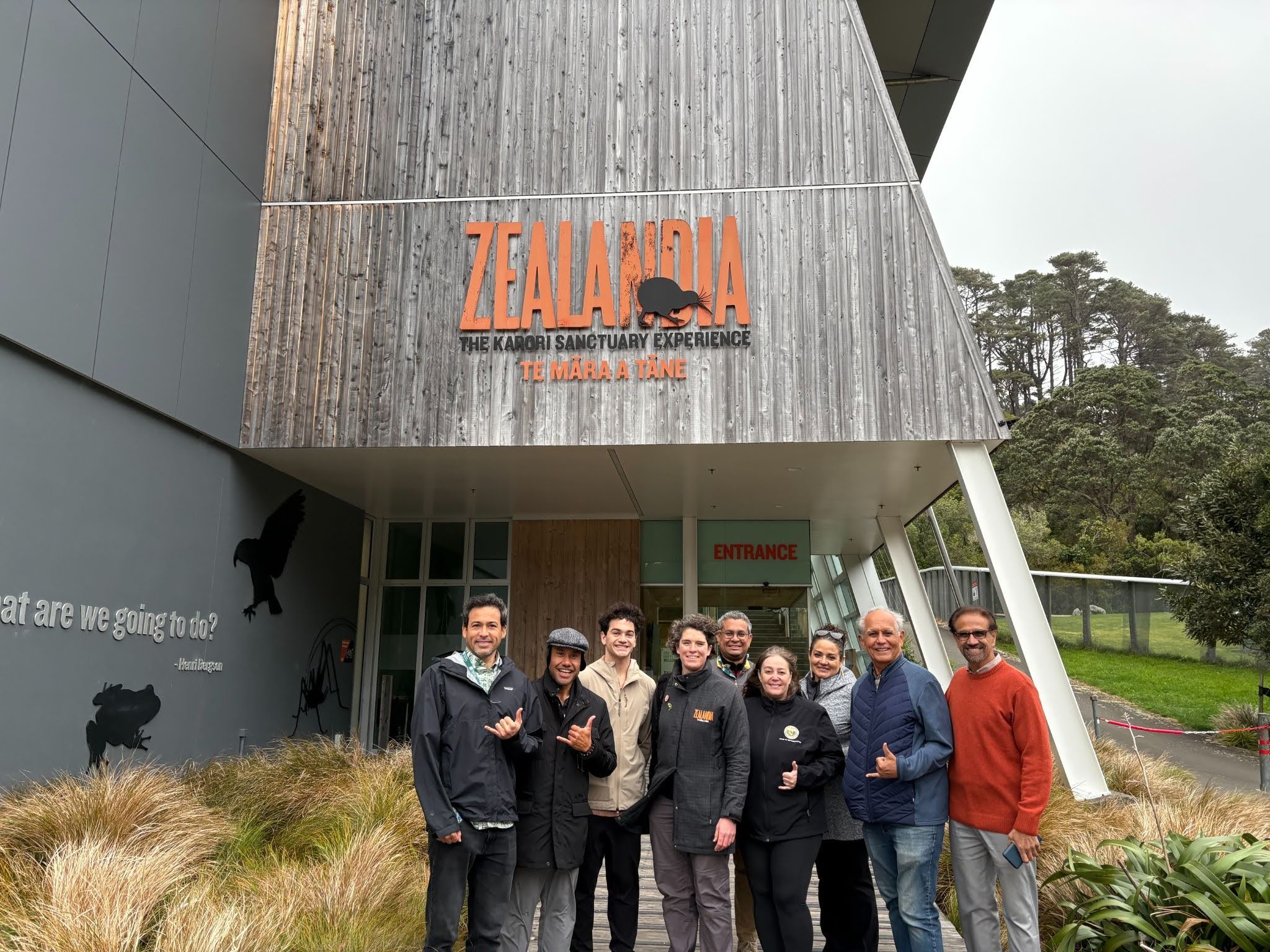
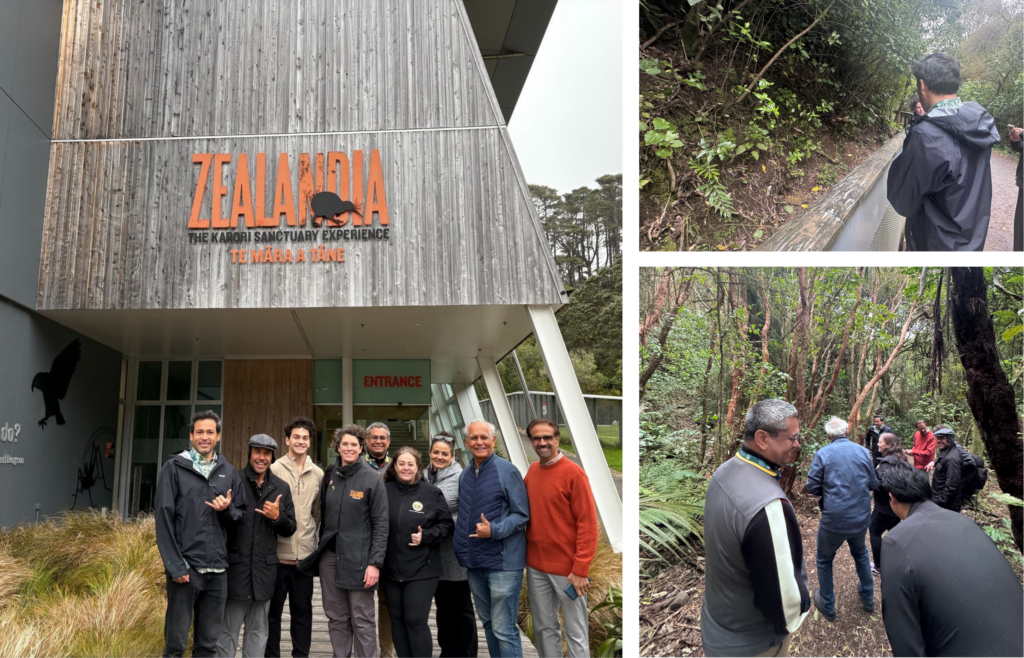
Late last year, Hawaii legislators and agency staff joined NCEL for an international learning exchange and tour of Zealandia Te Māra a Tāne, New Zealand’s world-first urban eco-sanctuary. The tour of Zealandia was hosted alongside a biosecurity learning exchange between Hawaii and New Zealand’s Ministry of Business, Innovation, and Employment (MBIE). Attendees included Hawaii state legislators and state agency leadership from the Departments of Natural Resources, Agriculture, and Health.
The purpose of the learning exchange was to share best practices for improving biosecurity measures, with both Hawaii and New Zealand facing similar environmental challenges as islands, including invasive species. Inspired by this exchange, Hawaii recently enacted legislation (SB 3253) to establish its own network of conservation sanctuaries.
Finding Solutions for the “Extinction Capital of the World”
Mitigating the threats of invasive species to native biodiversity and agriculture was a primary topic of the learning tour at Zealandia. In Hawaii, invasive species cause millions of dollars in agricultural damage each year and have led to the state’s designation as the “Extinction Capital of the World.” Efforts are now accelerating to find solutions to these threats. Fortunately, one promising solution was found at Zealandia.
- Why Do Invasive Species Matter? Invasive species are introduced plants and animals that harm agriculture and decimate native biodiversity. According to IPBES, invasive species are a leading driver of biodiversity loss as they kill or outcompete native wildlife and plants that evolved over millions of years in the absence of these threatening species.
The Zealandia Model: A Predator-Proof Success Story
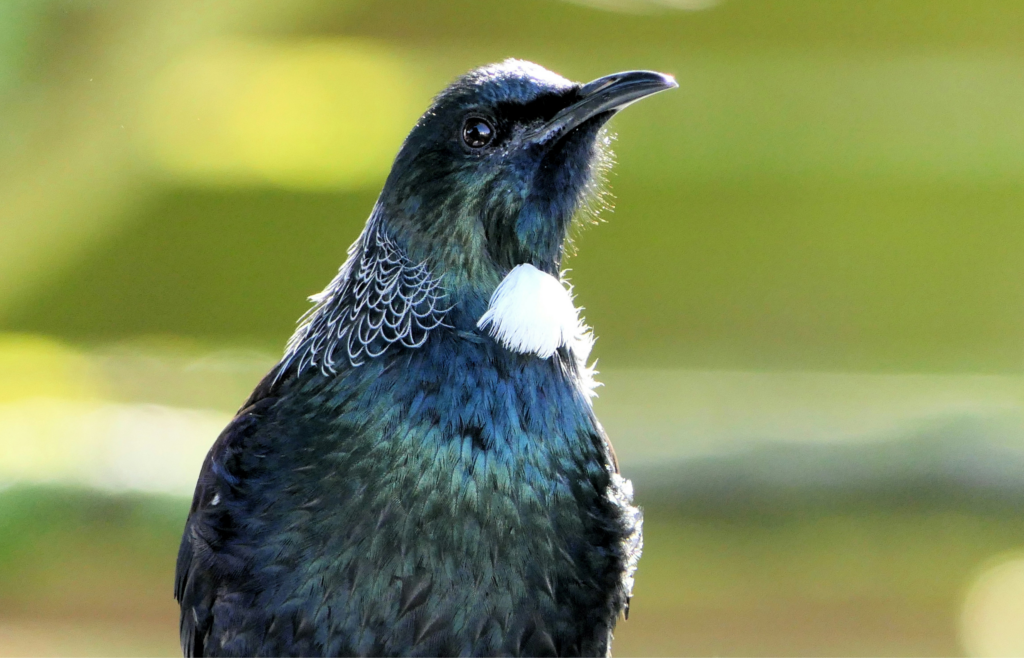
Community members in Wellington, New Zealand, established Zealandia in 1995 in an effort to protect the city’s native birds against invasive predators such as cats, rats, and stoats. At that time, many native species either disappeared in the city or were struggling to survive, such as the tui, which was reduced to just under 30 breeding pairs.
The community’s innovative solution was to construct a predator-proof fence around approximately 600 acres of forest. The approach was a first-of-its-kind attempt at scale and proved to be a success. Today, over 40 species of native birds, reptiles, fish, amphibians, and invertebrates call the sanctuary home, compared to fewer than 15 in 1995. Native birds also now flourish beyond the fence and into the city. Birds such as the tui now number over 10,000 pairs, while species that were extinct in Wellington for nearly 100 years, such as the kākā, now fill the Wellingtonian skies in the thousands. From skyscrapers to people’s own backyards, the city’s wildlife is beginning to thrive again.
Additionally, the sanctuary is located just 15 minutes away from New Zealand’s Parliament, which provides the city’s residents with an accessible opportunity to enjoy native nature. Previously, New Zealanders would need to spend valuable time and nearly $300 to see native nature on offshore islands free of invasive predators. Now, a one-time visit to Zealandia costs as little as $15 USD.
Scaling the Zealandia Blueprint for Recovery in Hawaii
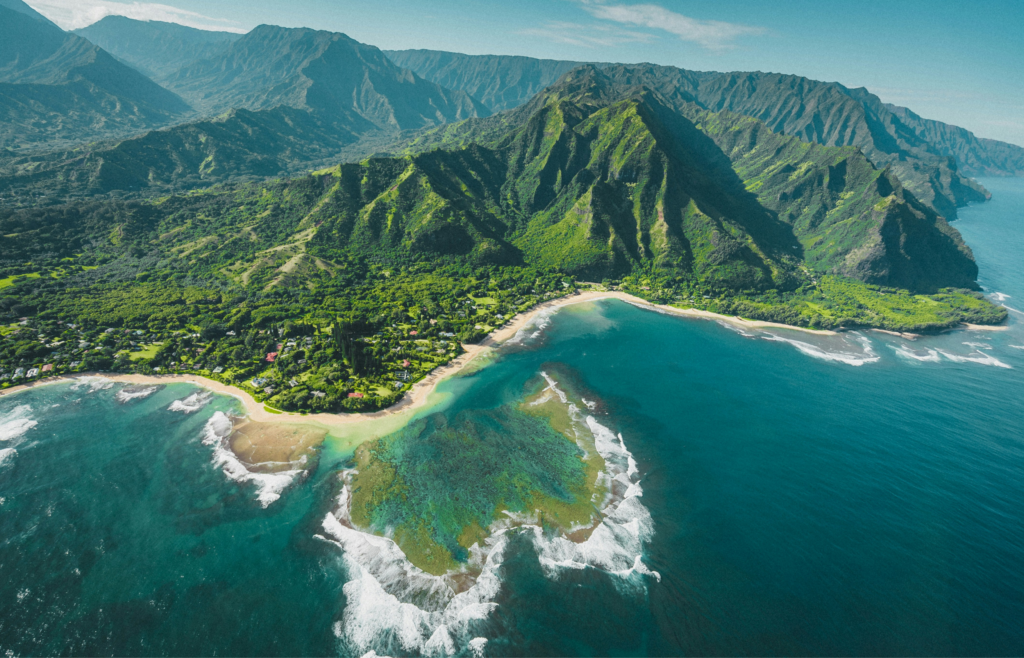
Wellington is one of the only cities actively recovering biodiversity, providing a blueprint for other entities to take action. Hawaii is now poised to join Wellington in the story of nature recovery after the recent signing of SB 3253, sponsored by State Senator Chris Lee.
Hawaii’s new law will establish three similar eco-sanctuaries in Hawaii. Key provisions of Hawaii’s bill include:
- Creation of the Hawaii Conservation Sanctuary as a nonprofit organization that will enhance and support the state in the conservation and recovery of endangered species.
- Designation of (1) one sanctuary in a site appropriate for the protection of native birds, (2) one sanctuary around a recreational body of water, and (3) one sanctuary to benefit species threatened both in Hawaii and elsewhere.
- Ensuring collaboration between the state and the Hawaii Conservation Sanctuary by reserving two seats on the board for state officials.
The establishment of eco-sanctuaries in Hawaii will benefit the state’s unique biodiversity that is also threatened by invasive species. Since Western contact with Hawaii, the state has lost over 270 native species. Birds that may benefit from these sanctuaries include the Hawaiian crow (ʻAlalā), Hawaiian short-eared owl (Pueo), and Hawaiian moorhen (‘Alae ‘Ula). Thus, Hawaii, like Wellington, can soon be one of the few places in the world to begin recovering nature and wildlife.
Learn More
To learn more about state-level policy options for invasive species, explore NCEL’s Issue Pages on Invasive Species and Biodiversity.