Policy Options
Nature-Based Solutions Policy Options
June 17, 2026
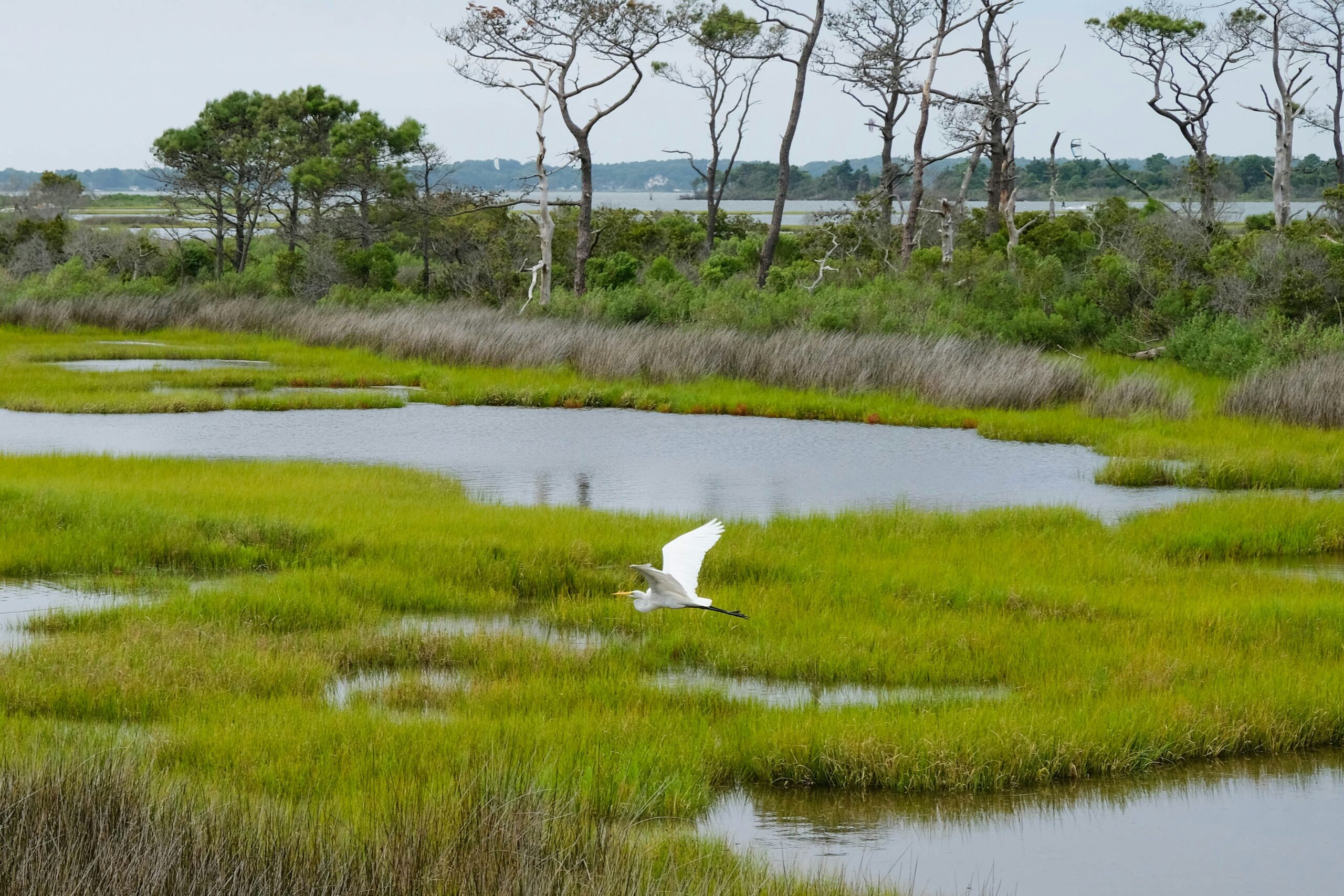
The 2023 Supreme Court decision in Sackett v. EPA rolled back federal protections for wetlands and intermittent waterways. Now only streams that flow year-round, or are continuous, are protected under the federal Clean Water Act (CWA). In 2025, the U.S. EPA and Army Corps of Engineers proposed new rules for protection of “waters of the United States” (WOTUS): wetlands can only be protected if they abut jurisdictional water and have surface water at least during the wet season. These rollbacks provide opportunities for states to define wetlands, establish water quality standards, and oversee permitting. There are myriad opportunities to ensure the long-term health of “nature’s kidneys.”
Wetlands — one of the world’s most productive ecosystems, with a global value of $39 trillion — cover just 6% of the Earth’s surface and are declining. (Ramsar)
Wetlands are the most effective nature-based tool to improve water quality, minimize flood damage, and adapt to a changing climate, with a $100 billion annual benefit to the U.S. (Ducks Unlimited)
40% of all species live or breed in wetlands, and half of all federally threatened species are wetland-dependent. (U.S. Fish & Wildlife Service)
Approximately 46-95% of U.S. commercial fishery landings and 80-85% of recreational fishery landings are dependent upon coastal wetlands and estuaries. (U.S. Fish & Wildlife Service)
Define Wetlands as WOTS: States can include wetlands in the “waters of the state” (WOTS) definition so that wetlands are included in state permitting and water quality standards.
Determine and Permit Activities on Wetlands: Most wetlands are no longer covered by the CWA and are subject to destruction without a state Section 404 dredge and fill permitting program.
Monitor and Assess Wetlands: Monitoring and assessment (M&A) of wetlands can track ecological health, water filtering, and flood control to help guide conservation priorities and ensure regulatory compliance.
Protect Wetlands From Development: Protecting wetlands from development can include: (1) incentives to retire or release development or water rights; (2) establishing “no net loss” and/or “net gain” standards for wetlands; or (3) requiring buffers, zoning, or natural shore armoring.
Require Mitigation: Mitigation to avoid, minimize, replace, or compensate can occur through mitigation banks (Florida SB 492 (Enacted 2025) and Pennsylvania HB 2296 (Introduced 2026)); in-lieu fee programs (Illinois HB 3596 (Introduced 2026)); or conservation banking for areas with listed species (California SB 1148 (Enacted 2013)).
This resource was created by Carrie Rossman, Conservation Leadership Scholar and Master’s Student at Colorado State University.
Your donation funds the fight for equitable actions that protect the environment and our health.
Donate