Events
State Legislators Meet with PJM Leadership on Energy Affordability and Grid Reform
June 12, 2026
Overview
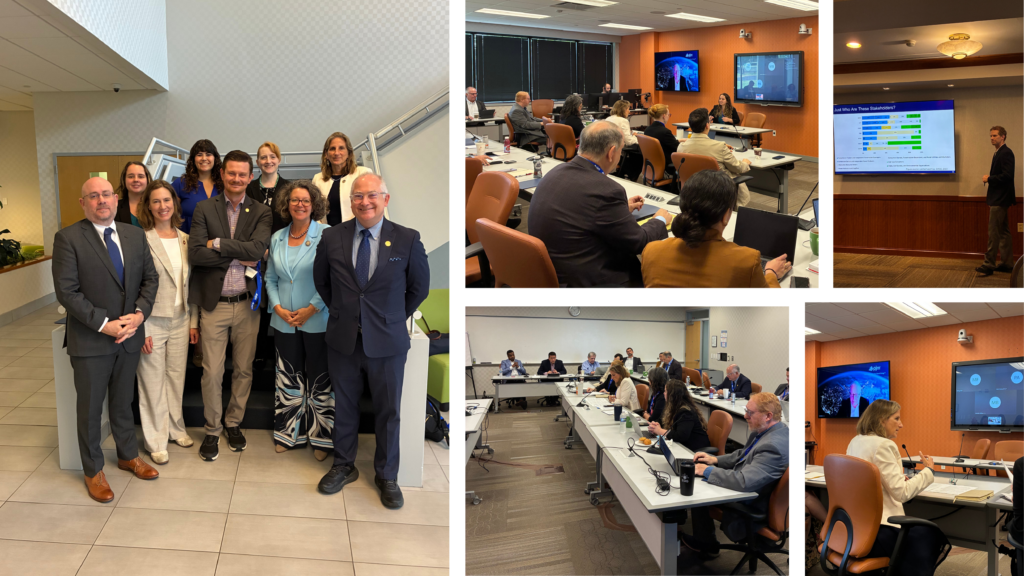
On June 12, NCEL convened 11 legislators from six states in the PJM region to meet with PJM CEO David Mills and other PJM staff members. During the meeting, lawmakers engaged directly with PJM leadership on proposals impacting energy affordability, reliability, and decarbonization. The meeting allowed lawmakers to share their constituents’ perspectives and collaborate with PJM staff on solutions.
- Why It Matters: Electricity costs in the PJM region — America’s largest electricity market, spanning 13 states and the District of Columbia — have risen significantly in recent years. There are several contributing factors, including the expansion of the data center industry and long delays for renewables in the PJM interconnection queue. While state policy is crucial to address rising costs, regional grid operators play a major role in shaping energy infrastructure, policy, and costs.
The day began with discussions among legislators and PJM staff on three major topics: (1) Connect and Manage (CAM) and Reliability Backstop Procurement (RBP), (2) capacity market reforms, and (3) PJM governance.
1. Connect and Manage (CAM) and Reliability Backstop Procurement (RBP)
During discussions on the CAM and RBP proposals, lawmakers urged PJM to ensure that any new market mechanisms created to meet data center load will allow states to allocate costs fairly to data centers rather than ratepayers. Discussions also focused on boosting transparency, accelerating new generation timelines, and aligning PJM policies with state energy goals.
2. Capacity Market Reforms
Lawmakers also discussed PJM’s recently released capacity market reform white paper and the ongoing capacity market issues that are driving costs up. Legislators clarified next steps in PJM’s capacity market reform process and emphasized the importance of preserving the grid as a public good while enabling the fair participation of energy storage, demand response, and renewables.
3. PJM Governance
The meeting concluded with a discussion of governance and stakeholder reforms. Legislators emphasized the importance of meaningful state participation in PJM’s decision-making processes and brainstormed different solutions for states to be actively involved in regional policy decisions. Legislators also urged PJM to implement policies to increase transparency in its often opaque stakeholder process, including publishing all votes and recording all meetings.
Following the meeting with PJM, legislators attended a presentation and strategy session led by Michael Helbing of Penn State’s Center for Energy Law and Policy. Legislators learned about Regional Transmission Organization (RTO) governance models that could be adopted in PJM to improve state engagement and public accountability. This conversation helped to inform NCEL’s comment letter — signed by 98 legislators — to the Federal Energy Regulatory Commission (FERC) for its Technical Conference on PJM Governance.
Looking Ahead
As electricity costs continue to rise in PJM states, strong communication and collaboration between state lawmakers and PJM staff provide a path for shared solutions. This meeting was an important step in building those relationships while giving legislators and PJM staff a venue to share ideas, express concerns, and brainstorm solutions. For more information on NCEL’s work on PJM, please contact NCEL’s Grid Specialist Emily Odgers.