Briefing Book
Pesticides Briefing Book
February 21, 2024
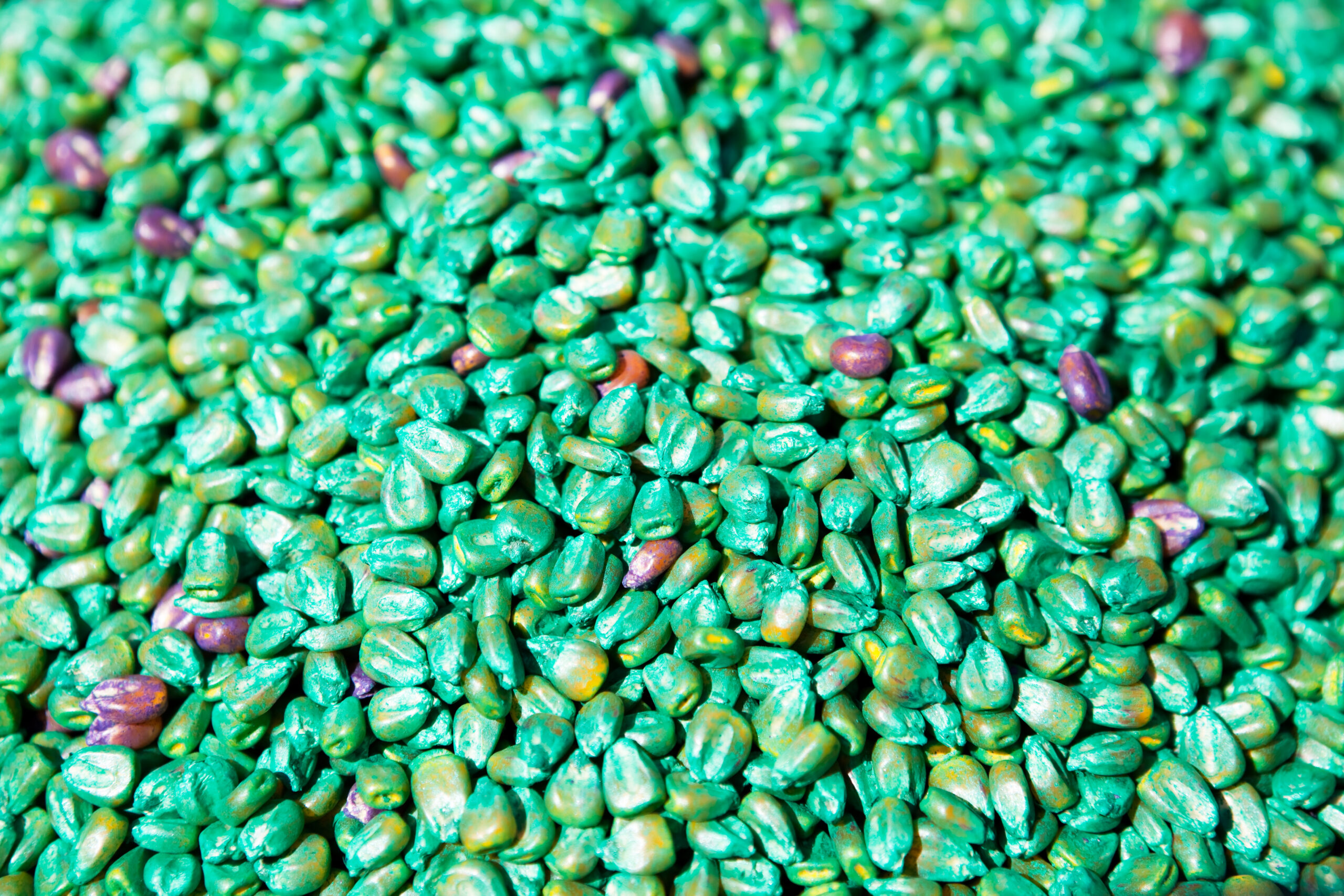
Brightly colored pesticide-treated seeds now dominate American agriculture. Nearly all commercially-available corn and soy seeds are coated with a pesticide seed treatment, and these coatings are also common on crops such as wheat, sugar beets, sunflowers, and squash. These coatings often contain pesticides, microplastics, and PFAS, and are applied prophylactically (with or without a known pest threat). Further, many pesticides used in these seed treatments are systemic, meant to be absorbed through the entire plant’s tissues. Yet only 2% of pesticides used are absorbed; the remaining 98% leaches into soil and water, harming pollinators, soil health, and aquatic life. Excess seeds also lack safe disposal mechanisms, because they are not regulated by the EPA as pesticides. Instead, under the “treated article exemption", they are considered a “treated article” in the same manner as plastic pesticide containers. This status creates minimal regulation, leading to little enforcement of safe-user compliance, no use-reporting of seeds, and frequent pesticide overuse.
Treated seeds often do not provide economic benefits to the farmers who use them. (Purdue University)
Neonicotinoid insecticides are the most common pesticides used in treated seed coatings. Yet, coatings often combine additional pesticides such as fungicides, which can amplify neonicotinoids’ environmental impact. (PubMed Central)
Treated seeds harm birds that eat them, can kill pollinators that feed on crops grown from the seeds, and impair soil health and aquatic ecosystems. (American Bird Conservancy); (Science Daily); (PubMed Central); (Trout Unlimited)
Human health suffers from treated seeds, as the dust from treated seed containers can volatilize into the air and sicken farmworkers. (PubMed)

Your donation funds the fight for equitable actions that protect the environment and our health.
Donate