
Events
2026 NCEL & WWF State Plastic Policy Workshop Recap
May 28, 2026
Overview
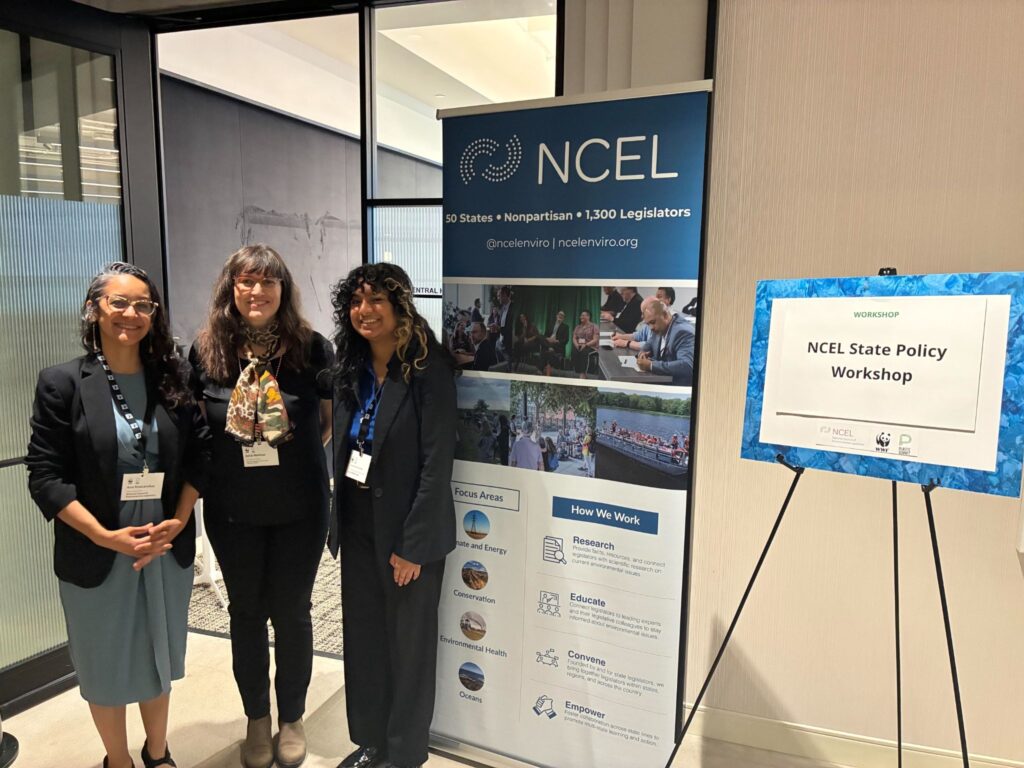
On April 28, NCEL and the World Wildlife Fund (WWF) co-hosted the State Plastic Policy Workshop in Washington, D.C., for state lawmakers to explore system-wide solutions to plastic pollution. The workshop took place ahead of the fourth annual WWF Plastic Policy Summit and brought together six legislators from Mid-Atlantic, New England, and Midwest states. Workshop attendees learned more about plastic policy, with a focus on Extended Producer Responsibility (EPR) and Deposit Return Systems (DRS), while taking part in robust discussions, exchanging best practices, and collaborating with local leaders.
- Why it matters: The U.S. recycles just 5% of its plastics, in part because of a fragmented landscape that relies on 9,000 separate recycling programs. In response, recent efforts to address plastic pollution have focused on systemic statewide policy options such as EPR and DRS. EPR can take pressure off municipal governments by shifting the financial responsibility from taxpayers to producers, enabling a state to move toward equitable recycling access. DRS has also been shown to be an effective tool for achieving higher beverage container recycling rates.
Setting the Scene for Plastic Policy Options
The half-day workshop kicked off with NCEL presenting on the current policy landscape, highlighting that 28 states and D.C. have introduced at least 167 bills to reduce plastic waste in 2026. WWF continued with a short overview of EPR and DRS frameworks to provide background for the day’s sessions.
Sessions began with a presentation by Ocean Conservancy on their United States of Plastic report, which analyzes laws to address plastic pollution across all 50 states and D.C. As states consider both EPR and DRS, Ocean Conservancy emphasized the potential synergies between these two systems, including cost savings and the efficiencies of shared infrastructure.
Place-Based Discussions
Next, attendees took part in discussions on place-based approaches to plastic pollution. Legislators analyzed how regional factors — such as geography, stakeholder groups, regulatory capacity, and rural-urban dynamics — shape the ambition and structure of state plastic policies. Participants explored opportunities to build on existing frameworks, such as litter taxes, while discussing options for establishing recycling and reduction targets.
Stakeholder Engagement Discussions
Attendees also heard from mayors in Iowa and Arkansas — members of the Mississippi River Cities and Towns Initiative (MRCTI) — who spoke about their work on MRCTI’s Plastic Pollution and Clean Water Initiative as well as their respective cities’ recycling landscapes. Through a stakeholder mapping exercise, state lawmakers and mayors explored the impacts of various policy options and identified new avenues for alignment with local stakeholders. The discussions emphasized the economic value of EPR and DRS systems as well as the potential for cities and states to work together to strengthen state policy.
Closing Session: Alternative Materials
The final workshop session provided an introduction to alternative materials, with speakers from WWF and global packaging company Amcor. Legislators learned that the distinctions between biobased, compostable, and biodegradable materials are important for crafting policies related to the end-of-life of packaging. Specifically, these nuances are useful when setting definitions and determining which materials are covered under an EPR system.
After the workshop, participants had the opportunity to attend the full WWF Plastic Policy Summit. Legislators met with policy experts during “office hours,” connected with a wide range of stakeholders, and learned about a variety of plastic topics, including microplastics, EPR, source reduction, and reuse.

Key Takeaways and Next Steps
Legislators came away from the NCEL and WWF State Plastic Policy Workshop with enriched perspectives on local and state collaboration as well as best practices for stakeholder engagement. In addition, participants were equipped with resources, a deeper understanding of EPR and DRS, and connections to both experts and other legislators to strengthen policy efforts in the coming legislative sessions.